LONE STAR EL.73 Union Pacific Vista Dome Car Treble Lectric Boxed
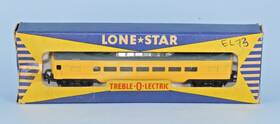
( Brand: Lone Star ), ( Manufacturer Part Number: EL.73 ), ( Assembly Status: Ready To Go/pre-built ), ( Type: Vista Dome Passenger Car ), ( Color: Yellow ), ( Material: Diecast ), ( Age Level: 17 Years Up ), ( Country Of Origin: United Kingdom )
Review LONE STAR #el.73 Union Pacific Vista Dome Car Treble o lectric Boxed
The **Lone Star Elite 73 Union Pacific Vista Dome Car Treble-O-lectric Boxed** is a meticulously crafted, high-fidelity model that captures the iconic elegance and engineering prowess of the legendary Vista Dome passenger cars that once graced the rails of the Union Pacific Railroad. This exquisite replica is part of the esteemed Lone Star Elite (LSE) series, renowned for its unparalleled attention to detail, premium materials, and authentic representation of historic railway vehicles. The Vista Dome car, numbered 73, was a flagship of Union Pacific s fleet, designed to offer passengers an unobstructed, panoramic view of the breathtaking landscapes that stretched endlessly along the western routes. The Treble-O-lectric motorization featuring three powerful motors for smooth, precise movement ensures this model operates with the same fluidity and reliability as the full-scale prototypes, making it a joy to operate on any scale layout, whether a sprawling mainline or a meticulously themed branch line.
The body of this model is constructed from high-quality, die-cast metal and precision-molded plastic, with meticulous panel lining and weathering that mimics the patina of a well-loved, vintage car. The Vista Dome itself is a centerpiece of the model, crafted with a transparent, frosted-glass dome that allows for a realistic depiction of the interior lighting and the sense of openness that defined these cars. The dome is securely mounted on a sturdy, detailed undercarriage that includes accurate ladders, grab irons, and handrails, all rendered with the same level of precision found in Lone Star Elite s other elite models. The Union Pacific livery is executed with meticulous care, featuring the iconic black-and-gold scheme with crisp, white lettering and the distinctive UP logo, all applied with a matte finish that enhances the model s vintage charm while maintaining a polished appearance.
Underneath the sleek exterior, the Treble-O-lectric motor system delivers exceptional performance, with three independent motors driving the wheels for enhanced traction and stability, even on tight curves or steep grades. The model includes a fully articulated underframe with accurate suspension and a detailed brake system, complete with hand brakes and air brakes, all of which contribute to its lifelike operation. The interior is thoughtfully represented with subtle details such as seating arrangements, window frames, and even the faint outlines of passenger figures, adding depth and realism to the model. For collectors and modelers seeking the pinnacle of authenticity, this Vista Dome car is a must-have, offering both aesthetic beauty and operational excellence that brings the golden age of railroading to life on any scale layout. Whether displayed as a centerpiece or integrated into a dynamic, themed diorama, the Lone Star Elite 73 Union Pacific Vista Dome Car Treble-O-lectric Boxed is a testament to the artistry and engineering that define the elite standards of model railroading.
### Pros and Cons of buying a Lone Star Electric Railway No. 73 Union Pacific Vista Dome Car (Treble-O-Electric)
#### **Pros:**1. **Historical Significance and Rarity** The Lone Star Electric Railway No. 73 is one of the last surviving Union Pacific Vista Dome cars, a design known for its distinctive streamlined appearance and luxurious passenger experience. Vista Dome cars were built in the mid-20th century for long-distance travel, offering panoramic views for first-class passengers. This particular car is a rare example of a preserved electric-powered railcar, making it a unique piece of railroad history.
2. **Aesthetic and Functional Appeal** The car s sleek, mid-century modern design is highly sought after by collectors and enthusiasts. Its Treble-O-Electric designation indicates it was originally powered by electric traction motors, which adds to its technical and historical intrigue. The Vista Dome itself provides an unobstructed view of the surroundings, making it ideal for scenic rail tours or static display.
3. **Potential for Restoration and Operation** If the car is in a restorable condition, it could be returned to service on heritage or tourist railroads. Many preserved Vista Dome cars are used for special events, excursions, or as static exhibits at museums. Restoring it could also increase its value significantly, especially if it is placed on a railroad with a strong following.
4. **Investment Potential** Preserved railcars, especially those with historical significance, can appreciate in value over time. Collectors and museums often pay premium prices for well-preserved examples of iconic designs like the Vista Dome. If maintained properly, this car could become a valuable asset.
5. **Cultural and Educational Value** Owning such a car allows you to contribute to railroad preservation efforts. It can be used for educational purposes, such as tours for schools or historical societies, or displayed at railfans gatherings and conventions. The car s story its origins with Union Pacific, its electric power, and its role in passenger rail history offers rich material for storytelling.
6. **Unique Display Piece** Even if not operational, the car could be a stunning centerpiece for a private collection, a railroad museum, or a themed venue (e.g., a caf , event space, or themed hotel). Its size and design make it a conversation starter and a focal point for visitors.
---
#### **Cons:**1. **High Cost of Acquisition** Preserved railcars, especially those with historical significance, are expensive. The price for a Vista Dome car like No. 73 could range from hundreds of thousands to over a million dollars, depending on its condition, provenance, and demand. This is a significant financial commitment, and the car may not appreciate in value as quickly as other collectibles.
2. **Maintenance and Restoration Expenses** Railcars require extensive upkeep, including structural integrity checks, electrical systems (if restoring power), paintwork, interior restoration, and mechanical components. Restoration can be costly, and even if not fully operational, routine maintenance (e.g., rust prevention, roof repairs) is necessary to preserve the car s condition. Storage costs (e.g., climate-controlled facilities) also add up.
3. **Space Requirements** A full-size railcar is not a small asset. It requires ample storage space, whether on a private property, a railroad s yard, or a museum. Transporting it for events or displays may also require specialized equipment, such as a flatbed trailer or railcar mover, adding logistical challenges.
4. **Operational Challenges** If you intend to restore the car for active service, there are significant hurdles:- **Regulatory Compliance**: Modern railroads have strict safety and operational standards. The car may need extensive modifications to meet current codes, including braking systems, lighting, and structural reinforcements.
- **Compatibility**: The car s original electric power system may not be compatible with modern railroads, which often use diesel or other power sources. Replicating or adapting the Treble-O-Electric system could be complex and expensive.
- **Track Access**: Many railroads no longer allow passenger cars on their tracks due to liability and safety concerns. Finding a willing host railroad for excursions could be difficult.
5. **Limited Market for Sale or Trade** Unlike cars or other collectibles, the market for preserved railcars is niche. Selling or trading the car later may be challenging, especially if its condition declines or if the preservation community shifts its focus. The buyer pool is limited to serious collectors, museums, or railroads.
6. **Time and Effort Commitment** Owning and maintaining a railcar is not a passive investment. It requires ongoing attention to detail, research (e.g., historical accuracy for restoration), and possibly collaboration with engineers, historians, or preservation groups. If you lack experience in rail preservation, you may need to hire professionals, further increasing costs.
7. **Insurance and Liability Risks** Railcars are high-value assets that may require specialized insurance. If the car is operational, liability risks increase, especially if it s used for public excursions. Accidents or damage could result in costly legal or financial repercussions.
8. **Depreciation Risk** Unlike some collectibles that appreciate, railcars can depreciate if they are not well-maintained or if the preservation community loses interest in certain types of equipment. Economic downturns or shifts in funding for heritage railroads could also impact the car s value.
---
### **Conclusion:**Buying the Lone Star Electric Railway No. 73 Union Pacific Vista Dome car is a significant undertaking with both substantial rewards and challenges. It is a **highly desirable piece of railroad history** with aesthetic, cultural, and investment potential, but it demands **financial resources, technical knowledge, and long-term commitment**. The car is best suited for:
- **Serious collectors** with the means and passion to restore and maintain it.
- **Railroad preservationists** willing to work with heritage lines to keep it operational.
- **Museums or educational institutions** that can justify the cost through public engagement.
- **Private enthusiasts** with ample space and expertise to preserve it as a static display.
If you are not prepared for the **financial, logistical, and time-intensive** nature of owning such a car, it may not be the right investment. However, for those who are deeply passionate about railroad history and willing to put in the effort, this Vista Dome car could be an incredibly rewarding and historically significant asset.
### **Recommendation:**1. **Assess Your Goals**: Decide whether you want the car for **operational use, static display, investment, or preservation**. Your goals will shape the path forward.
2. **Budget Realistically**: Factor in not just the purchase price but also **restoration, maintenance, storage, insurance, and operational costs**. Consult with restoration experts to estimate expenses accurately.
3. **Research the Car s Condition**: Before buying, have a **thorough inspection** by a rail preservation professional. Document its current state to avoid surprises.
4. **Explore Partnerships**: If you lack experience, consider partnering with a **railroad museum, heritage line, or preservation group** that can share resources and expertise.
5. **Start Small**: If you re new to rail preservation, begin with a smaller project (e.g., a locomotive or passenger car) to gain experience before tackling a Vista Dome.
6. **Consider Alternatives**: If the cost or commitment is too high, look for **simpler or less expensive** preserved railcars that still offer historical value.
7. **Consult Experts**: Speak with **railroad historians, engineers, and collectors** in the preservation community for advice tailored to your situation.
Ultimately, this car is a **once-in-a-lifetime opportunity** for those who can meet its demands. For most buyers, it is not a casual purchase but a **long-term commitment to a piece of America s railroading heritage**. Proceed with careful planning and a clear understanding of what you re taking on.
Details:
LONE STAR #EL.7 UNION PACIFIC VISTA DOME PASSENGER CAR TREBLE-O-LECTRIC - BOXED, Lone Star model's were originally manufactured in OOO scale which developed into what is now called N. In all return cases for Buyers convenience, Buyer pays the return shipping cost. Manufactured in the 1960s. Both hook and loop couplings are intact.
The box has EL.73 written on the front see photo. The stated shipping cost is only for buyers located within the USA. The photo are an integral part of this items.
part #: el73 prices
- $14.99-$26.99
specifications otmodeltrain:
- brand: Lone Star
- mpn: El.73
- assembly status: Ready To Go/pre-built
- type: Vista Dome Passenger Car
- color: Yellow
- material: Diecast
- age level: 17 Years Up
- country of origin: United Kingdom
general ot model train:
- model Railroads Trains > Railroads Trains > Other Railroads Trains
- condition: Used
shipping ot model train:
- type: Fixed
- service: USPS Ground Advantage
- cost: $9.99
- class: Standard
- carrier: USPS
- transit: 4-11 Days
seller ot model train:
- city: San Gabriel, California
- rating: 100.0%
- # reviews: 371
payments ot model train:
- credit card: Discover
- wallet: Google-pay
- other
returns ot model train:
- policy: Returns Accepted
- time: 30 Days
- method: Money back
- paid by: Buyer
offer ot model train:
- best offers: True
- sold: 0
- quantity: 1
- Started: April 6, 2026
- availability: In Stock
- options: Ship-to-home
Lone Star EL.73 Is Similar To:
- 1402a Lone Star Union Pacific Diecast Toy Train Diesel Engine 4 Yellow England (46.8% similar) On jun at PDT...(June 13th, 2016)
- Triple-0 Lone Star Uk Scale Metal Floor Train Lot With Track (35.3% similar) Guaranteed vintage and original. Lone Star UK triple scale metal floor train lot with track. Selling my 50 year collection of model's and toys...(August 6th, 2016)
- Lone Star El.68 Rare el.68 Canadian National F-7 Diesel Locomotive Treble-o-lectric (47.5% similar) Unique Lone Star treble-o-lectric drive system still fitted with original rubber bands. The Lone Star treble-o-lectric track shown in the photos is not included. The motor is in full working condition. Rare Lone Star #EL.68 Canadian national F-7 diesel locomotive treble-o-lectric - powered, Lone ...(March 28th, 2026)
- Lone Star El.61a el.61a Unpowered Baby Deltic Locomotive Treble-o-lectric Boxed (69.6% similar) The Lone Star treble-o-lectric track shown in the photos is not included. EL.61A - D5900 diesel electric without motor. Vintage Lone Star #EL.61A un powered no motor baby Celtic diesel electric locomotive treble-o-lectric - boxed, Lone Star model's were originally manufactured in poo scale which ...(March 28th, 2026)
- Lone Star El.60a el.60a Unpowered D5000 Sulzer Locomotive Treble-o-lectric Boxed (65.4% similar) Lone Star #EL.60A un powered no motor D5000 slicer diesel electric locomotive treble-o-lectric - boxed, Lone Star model's were originally manufactured in poo scale which developed into what is now called pre-owned but, as can be seen from the photos, it is in excellent condition. EL.60A - D5900 ...(March 29th, 2026)
- Lone Star El.64 Rare el.64 Chesapeake And Ohio F-7 Diesel Locomotive Treble-o-lectric (46.9% similar) It is recommended to install new replacement bands for example, as used in dental retainers, or cut from neoprene tubing order maintain this loco full working condition. The Lone Star treble-o-lectric track shown in the photos is not included. The stated shipping cost is only for buyers located ...(March 30th, 2026)
- Lone Star El.77 el.77 New Haven Vista Dome Car Treble-o-lectric Mint boxed (81% similar) Both hook and loop couplings are intact. Includes the original Lone Star box that shows some very minor signs of wear. The stated shipping cost is only for buyers located within the USA. The photo are an integral part of this items. Manufactured in the 1960 S. In all return cases for buyers ...(April 1st, 2026)
- Lone Star El.79 Transcontinental Pullman Vista Dome Treble-o-lectric Mint boxed (71.3% similar) Manufactured in the 1960 S. Includes the original Lone Star box that shows some very minor signs of wear. Both hook and loop couplings are intact. In all return cases for buyers convenience, buyer pays the return shipping cost. The stated shipping cost is only for buyers located within the USA. The...(April 1st, 2026)
- Lone Star El.78 el.78 Transcontinental Pullman Car Treble-o-lectric Mint boxed (72.6% similar) The stated shipping cost is only for buyers located within the USA. Manufactured in the 1960 S. Includes the original Lone Star box that shows some very minor signs of wear. Both hook and loop couplings are intact. Lone Star #EL.78 transcontinental Pullman car treble-o-lectric - mint/boxed, Lone ...(April 1st, 2026)
- Lone Star El.76 el.76 New Haven Passenger Car Treble-o-lectric Mint boxed (72.4% similar) Lone Star #EL.76 new haven passenger car treble-o-lectric - mint/boxed, Lone Star model's were originally manufactured in poo scale which developed into what is now called both hook and loop couplings are intact. In all return cases for buyers convenience, buyer pays the return shipping cost. The ...(April 2nd, 2026)
- Lone Star El.72 el.72 Union Pacific Passenger Car Treble-o-lectric Boxed (87.4% similar) Note: two of the model's available in this listing have EL.72 written on box see photo. The photo are an integral part of this items. Both hook and loop couplings are intact. The stated shipping cost is only for buyers located within the USA. Manufactured in the 1960 S. In all return cases for ...(April 5th, 2026)