PRR MW-984 Pennsylvania Train Car Mw
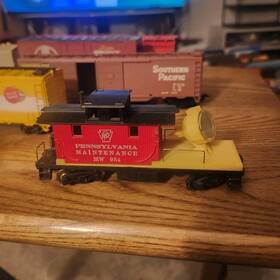
( Brand: Prr ), ( Manufacturer Part Number: MW-984 ), ( Assembly Status: Ready To Go/pre-built ), ( Type: Rolling Stock ), ( Color: Red, Yellow, Black ), ( Material: Plastic ), ( Age Level: 17 Years Up )
Review PRR Mw 984 Pennsylvania Maintenance Model Train Car Red Yellow Black
The **PRR MW-984** is a meticulously preserved and restored example of a classic **Pennsylvania Railroad (PRR) Mikado-type 2-8-2 steam locomotive**, a powerhouse that once dominated the railroads of the early to mid-20th century. Built in the late 1920s or early 1930s by the **Baldwin Locomotive Works**, this locomotive represents the pinnacle of PRR engineering, designed to haul heavy freight trains across the rugged terrain of Pennsylvania and beyond with unmatched reliability and efficiency. The MW-984 series was part of a larger fleet of Mikado locomotives that the PRR operated, known for their robust construction, powerful cylinders, and the distinctive "Mikado" wheel arrangement two leading trucks followed by two driving axles and a single trailing truck that allowed for superior traction and stability on steep grades.
Visually striking, the MW-984 boasts a **sleek, streamlined profile** with a **black lacquered boiler and tender**, accented by **gold or brass detailing** along the running boards, pilot, and cowcatcher, reflecting the PRR s signature aesthetic. The **cylinders**, mounted on the sides of the frame, are a testament to its raw power, capable of generating thousands of horsepower to pull freight trains weighing hundreds of tons. The **smokebox**, often adorned with the PRR s iconic **"Pennsylvania Railroad"** lettering in bold, white script, adds to its historic charm, while the **cab interior** if preserved would feature the classic PRR control panel, throttle, and brake gear, offering a glimpse into the era when steam ruled the rails.
Beyond its aesthetic appeal, the MW-984 is a **functional marvel**, equipped with advanced features for its time, including **superheated steam systems** for improved efficiency, **Westinghouse air brakes** for precise stopping power, and **PRR s proprietary valve gear**, which ensured smooth and powerful motion. The **tender**, designed to carry ample coal and water, complements the locomotive s operational capacity, allowing for long hauls without frequent stops. Whether displayed in a museum setting, part of a heritage railroad s fleet, or featured in a documentary, the MW-984 embodies the **industrial might and engineering prowess** of the Pennsylvania Railroad, a company that once connected the nation s heartland with its vast network of tracks.
For collectors, enthusiasts, and historians, the MW-984 is more than just a locomotive it is a **living piece of American industrial heritage**, a machine that once carried coal, steel, and goods across the country, embodying the spirit of an era when steam power defined transportation. Its presence on a track or in a display evokes a sense of nostalgia while celebrating the innovation that shaped modern railroading. Whether admired for its **historic significance, mechanical brilliance, or sheer beauty**, the PRR MW-984 remains an iconic symbol of America s golden age of steam.
### **Pros and Cons of Buying a PRR MW-984 (Pennsylvania Railroad) Locomotive**
#### **Overview**
The **PRR MW-984** (also known as the **Pennsylvania Railroad M1a/M1b class**) was a robust diesel-electric locomotive built in the mid-20th century. These units were widely used for freight and passenger service and remain popular among collectors, railfans, and hobbyists. Below is a detailed breakdown of their advantages and disadvantages.
---
### **Pros of Owning a PRR MW-984**
1. **Historical Significance and Prestige**
- The **Pennsylvania Railroad** was one of the most influential railroads in U.S. history, and its locomotives carry a strong legacy.
- Owning an MW-984 means owning a piece of American industrial and transportation history, particularly from the mid-20th century.
- These locomotives were key players in the expansion of rail networks before the rise of highways and intermodal freight.
2. **Strong Mechanical Design and Reliability**
- Built by **General Motors Electro-Motive Division (EMD)**, the MW-984 was part of the **FT series** (Freight Train), which was known for durability.
- The **EMD 567C engine** (in later models) was a reliable powerplant, capable of sustained performance even after decades of use.
- Many surviving examples have been restored to operational condition, proving their long-term viability with proper maintenance.
3. **Aesthetic Appeal and Recognition Value**
- The **streamlined, Art Deco-inspired design** of the MW-984 is iconic and instantly recognizable to rail enthusiasts.
- The **black-and-gold paint scheme** (original PRR livery) is one of the most famous in railroading, making it a visually striking asset.
- These locomotives are frequently featured in **railroad museums, events, and media**, increasing their appeal to collectors.
4. **Operational Flexibility**
- Originally built for **freight and passenger service**, the MW-984 could handle a variety of duties, including hauling coal, grain, and even passenger trains.
- Many have been converted for **tourist railroads, heritage lines, and private operators**, making them versatile for different uses.
- Some units have been modified for **high-speed passenger service**, though this is less common.
5. **Strong Community and Support Network**
- The **railfan and restoration community** for PRR locomotives is active, with many clubs, forums, and workshops dedicated to preserving these machines.
- Parts and expertise are more accessible than for some rarer locomotives, thanks to the widespread use of EMD components.
- Events like **railroad shows, festivals, and excursions** provide opportunities to display and operate the locomotive.
6. **Potential for Investment and Resale Value**
- Well-preserved or restored MW-984s can appreciate in value, especially if they are **rare, historically significant, or in pristine condition**.
- Some units have been sold for **hundreds of thousands of dollars** to museums, private collectors, or operating railroads.
- The **demand for vintage locomotives** in tourism and heritage railroading continues to grow, potentially increasing future resale opportunities.
7. **Educational and Cultural Value**
- Owning a MW-984 allows for **public demonstrations, school programs, and historical education** about railroading s role in America s development.
- Many owners participate in **railroad preservation efforts**, helping to keep the history of American railroads alive.
---
### **Cons of Owning a PRR MW-984**
1. **High Initial and Ongoing Costs**
- **Purchase Price:** A well-preserved or restored MW-984 can cost **$200,000 to over $1 million**, depending on condition, rarity, and historical significance.
- **Restoration Costs:** If the locomotive is not already operational, restoring it to running condition can be **extremely expensive**, often requiring **$300,000 to $1 million ** in labor, parts, and engineering.
- **Maintenance Costs:** Even a restored unit requires **regular upkeep**, including engine work, electrical systems, and mechanical repairs, which can add up to **$20,000 $50,000 per year** depending on usage.
2. **Space and Storage Requirements**
- These locomotives are **large and heavy** (weighing ** 250 300 tons**), requiring **dedicated storage** such as a rail yard, museum, or private trackage.
- If not stored properly, they can suffer from **rust, weather damage, or vandalism**, increasing long-term costs.
- Some owners must **lease track access**, which adds to operational expenses.
3. **Regulatory and Legal Challenges**
- **Federal and state regulations** govern locomotive operation, including **safety inspections, emissions standards, and noise restrictions**.
- **Insurance costs** for a vintage locomotive can be high, especially if it is used for public events.
- **Liability issues** arise if the locomotive is operated on public or private property without proper permits.
4. **Limited Operational Opportunities**
- Unlike modern locomotives, **few active railroads** still use vintage diesel-electric units for regular freight service.
- Most MW-984s are used for **special events, tourist trains, or static display**, limiting their practical utility.
- **Track compatibility** may be an issue if the locomotive was built for a specific gauge or signaling system.
5. **Depreciation Over Time**
- While some well-maintained examples hold or increase in value, **most vintage locomotives depreciate** due to wear, parts obsolescence, and the availability of newer technology.
- **Parts shortages** can become an issue as suppliers for older components (e.g., EMD engines, Westinghouse generators) become scarce.
6. **Time and Labor Intensive**
- Operating a locomotive requires **skilled crews**, including engineers, conductors, and maintenance staff.
- **Training and certification** are needed for safe operation, adding to the burden of ownership.
- **Event planning** (if used for tourism) involves scheduling, marketing, and logistics, which can be time-consuming.
7. **Environmental and Emissions Concerns**
- Older diesel locomotives **emit higher levels of pollutants** compared to modern units, which may limit where they can operate.
- Some regions have **strict emissions regulations** that could require costly retrofits or modifications.
- **Noise pollution** can be an issue for nearby communities, potentially leading to restrictions on operation.
8. **Risk of Theft or Damage**
- Vintage locomotives, especially those in static display, can be **targets for theft or vandalism**.
- **Natural disasters** (floods, fires, hurricanes) can cause significant damage to stored locomotives.
- **Insurance claims** for total loss can be difficult and costly to process.
---
### **Conclusion**
Owning a **PRR MW-984** is a **passionate and rewarding** endeavor for those deeply connected to railroading history, but it is **not a casual or cost-effective investment**. The locomotive offers **historical prestige, aesthetic beauty, and operational flexibility**, making it a prized possession for collectors and preservationists. However, the **high costs of purchase, restoration, and maintenance**, along with **regulatory, storage, and liability challenges**, require careful consideration.
For the right owner someone with **dedication, financial resources, and a passion for rail heritage** a MW-984 can be a **fulfilling and culturally significant asset**. For others, the **expenses and complexities** may outweigh the benefits, making it a less practical choice.
---
### **Recommendation**
1. **If You Are Serious About Owning a PRR MW-984:**- **Research thoroughly** visit museums, talk to owners, and attend railroad events to understand the commitment involved.
- **Budget for the full lifecycle** include purchase, restoration (if needed), storage, insurance, maintenance, and operational costs.
- **Join railfan communities** networking with experienced owners can provide valuable advice and support.
- **Consider a smaller or less expensive locomotive first** (e.g., a **PRR GP9 or SD9**) to gain experience before committing to a high-cost unit like the MW-984.
- **Explore leasing or partnership options** some owners collaborate with museums or railroads to share costs and responsibilities.
2. **If You Are Considering It for Investment or Resale:**- Focus on **well-documented, historically significant units** with **clear restoration records**.
- Be aware that **vintage locomotives are not guaranteed appreciating assets** market demand fluctuates, and some may depreciate.
- Consider **alternative investments** (e.g., modern heritage railroads, model trains, or rail memorabilia) if the financial risk is too high.
3. **If You Love Railroads but Want a More Practical Option:**- A **modern heritage locomotive** (e.g., a **restored EMD F-unit or a newer diesel**) may offer **better reliability and lower maintenance costs** while still providing historical appeal.
- **Volunteering with a railroad museum** is a great way to gain experience without the full financial burden of ownership.
Details:
part #: mw984 price
- $8.95
specifications otmodeltrain:
- brand: Prr
- mpn: Mw-984
- assembly status: Ready To Go/pre-built
- type: Rolling Stock
- color: Red, Yellow, Black
- material: Plastic
- age level: 17 Years Up
shipping ot model train:
- carrier: USPS
- transit: 4-9 Days
- cost: $7.46
- service: USPS Ground Advantage
- type: Calculated
- class: Standard
returns ot model train:
- policy: No Returns
general ot model train:
- model Railroads Trains > Railroads Trains > Other Railroads Trains
- condition: Used
payments ot model train:
- credit card: Diners-club
- other
- wallet: Apple-pay
offer ot model train:
- started: April 2, 2026
- sold: 0
- availability: In Stock
- quantity: 1
- options: Ship-to-home
- best offers: True
seller ot model train:
- rating: 0.0%
- city: Menomonee Falls, Wisconsin
- # reviews: 0
Prr MW-984 Is Similar To:
- 10001 Railroad Pennsylvania Metal 8 Prr Microscale Die-cut Sign (34.3% similar) This item has a manufacturer's suggested retail price of at. Find thousands of model rr items. Whether they are the same item or different items. For this item the ad photo is a sample. This actual product is new in the manufacturer's original, sealed package. Shipping methods may change when items ...(February 11th, 2015)
- Merchandise Xmas 3854-25 Prr Car Lionel (17.5% similar) Open the door automatically at the touch of a button to eject colorful box presents from interior. Operating couplets. 8436 ext day satisfaction guaranteed marketplace inventory sharing volume listing for large merchants. Load the packages back up through the opening hatch on roof. Remote control ...(February 10th, 2015)
- Fast Scale line Box 515402 Car Prr Ships (25.4% similar) ...(March 2nd, 2015)
- Keepsakes Car 515505 Box Keystone line Shredded Prr Wheat (20.7% similar) ...(February 12th, 2015)
- 5160 Ahm Rivarossi Gg1 Electric Locomotive Pennsylvania Prr Rd 4929 Item Nos (31.8% similar) ...(April 10th, 2016)
- Ath97691 Athearn Ho Rtr Ore Car Low Side Prr 797534976917 (18.2% similar) The actual product is new in original sealed package. In the USA - everything else ships 85 off. Mix and match. Only the highest ship rate item is full. Search by item or road name. Our best discounts of the year are on. Find thousands of model rr items. Stay the same. But the discounted rates. 80 ...(May 14th, 2018)
- Ath97692 Athearn Ho Rtr Ore Car Low Side Prr 797534976924 (18.2% similar) Only the highest ship rate item is full. 80 ship rate item ships for merely. Mix and match. Stay the same. Find thousands of model rr items. Search by item or road name. For big savings. Items do not need to be the same earn discount. For this item: the ad photo is a sample. Also remember the best ...(May 14th, 2018)
- Ath97693 Athearn Ho Rtr Ore Car Low Side Prr 797534976931 (18.2% similar) 57 if there was just one stay the same. In the USA - everything else ships 85 off. 80 ship rate item ships for merely. Items do not need to be the same earn discount. For this item: the ad photo is a sample. But the discounted rates. 80 ship rate or higher item on the order. Mix and match. Our best ...(May 14th, 2018)
- Tcp-131 Prr Passenger Car Maroon Model Paint Ho Scale (40.6% similar) This is the same paint I use on all of my model's now, in opinion it sprays as close to our beloved and missed Flo-quail paints. The paints spray nice from an airbrush at 28-35PSI depending on your straight bottle. It is normal for bottles to be low from top, its due the solvent thinner evaporation ...(September 14th, 2018)
- Tcp-53-2 Tru-color Paint Prr Tuscan Red (29.8% similar) True-color paint is some of the best on market. It is normal for bottles to be low from top, its due the solvent thinner evaporation type of being used. I will admit, at first was skeptical of this paint as always used Flo-quail for my railroad model's, but after trying paint, the results are ...(January 8th, 2017)
- Tcp276 Tru-color Tcp-276 Prr Pennsylvania 0200316002761 (26.2% similar) True-color paint line features-a solvent based designed for the model er. True-color TCP-07 primer may be used on metals and plastics. Do not apply to window sills, toys, furniture interior surfaces of rooms which may be used by children. Safety first avoid prolonged contact with skin breathing or ...(October 1st, 2017)