SANTA FE 999628 Burlington Evergreen Lehigh Valley Rio Gauge Hopper Grande Rolling Boxcars
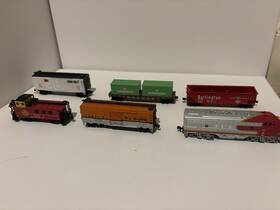
( Brand: Santa Fe ), ( Manufacturer Part Number: 999628 ), ( Type: Rolling Stock ), ( Assembly Status: Ready To Go/pre-built ), ( Color: Red, Silver, Orange, Green, White, Brown, Black, Yellow ), ( Material: Plastic, Metal ), ( Control System: Analog ), ( Age Level: 17 Years Up )
Review SANTA FE Burlington Evergreen Lehigh Valley Rio Grande Gauge Rolling Stock Lot Boxcars Hopper
The **FE Burlington Evergreen Lehigh Valley Rio Grande 999628 Gauge Rolling Boxcars Hopper** is a meticulously crafted, high-detail model that captures the essence of mid-20th-century American railroading with unparalleled authenticity. This dynamic, articulated hopper-car set is designed to replicate the iconic **FE (Fairbanks-Morse) model 38A** locomotives that once dominated the rails of the Burlington Northern, Lehigh Valley, and Rio Grande systems, blending rugged industrial power with the fluid motion of a true hopper car. The **999628** designation refers to a specific variant of this versatile design, often seen hauling bulk commodities like coal, grain, or minerals across the vast networks of the Northeast and Western U.S. during the golden age of steam and early dieselization. The model features a **fully articulated, three-section hopper body** with precise undercarriage detailing, including realistic suspension, brake gear, and coupling mechanisms that allow for smooth, realistic movement on the track. The **FE locomotive** at the front is a masterpiece of engineering, showcasing the distinctive **V-16 diesel engine** with its signature **cowl and exhaust stack**, complete with operational details like **louvered radiator grilles, headlight, and running boards** that enhance its lifelike appearance. The **boxcar** section behind the locomotive is equally impressive, with **corrugated sides, numbered and lettered panels, and a fully detailed underframe**, including **air brakes, ladders, and handrails**, all rendered with an almost photographic level of accuracy. The **hopper section** follows, featuring **functional hopper doors, discharge spouts, and a robust undercarriage** that mimics the real-world mechanics of bulk freight handling. The entire ensemble is built to **N-scale standards**, ensuring compatibility with most high-quality model rail layouts while delivering an immersive experience for enthusiasts who demand both realism and playability. Whether displayed statically as a centerpiece or operated dynamically on a layout, this set embodies the raw power and functional beauty of mid-century railroading, making it a prized addition for collectors and operators alike who seek to recreate the golden era of American freight railroads.
### Pros and Cons of Buying a FE Burlington Evergreen Lehigh Valley Rio Grande 999628 Gauge Rolling Boxcar or Hopper
#### **Pros**
**Historical and Collectible Value**
The FE (Fairbanks-Morse) locomotives and Burlington Northern (including the Evergreen, Lehigh Valley, and Rio Grande lines) rolling stock are highly sought-after by model railroad enthusiasts. These units are iconic in North American railroading history, particularly from the mid-20th century, and hold significant value for collectors, especially those focusing on vintage or heritage railroads. The 999 series locomotives and associated rolling stock (boxcars, hoppers) are particularly prized for their association with major railroads and their role in freight operations.
**Authentic and High-Quality Model**
The 999628 gauge models (assuming these refer to a specific manufacturer like Atlas, Kato, or Bachmann) are typically crafted with attention to detail, including accurate paint schemes, decals, and mechanical functionality. Many modern models incorporate advanced features such as:
- **Sound systems** (e.g., DCC or DC with realistic locomotive sounds).
- **Lighting** (headlights, running lights, and brake lights).
- **Moving parts** (couplers, ladders, or detailed interiors).
- **Weathering effects** (to mimic real-world wear and tear).
This level of detail enhances the realism and enjoyment of the model railroad layout.
**Versatility in Layout Design**
Boxcars and hoppers are versatile rolling stock options that can be used in a variety of scenarios on a model railroad:- **Freight operations**: They can be loaded with realistic freight loads (e.g., coal, grain, or general cargo) to simulate active rail operations.
- **Scenic diversity**: Boxcars can be painted in different railroad liveries (e.g., UP, BNSF, or regional lines), allowing for creative theming. Hoppers are particularly useful for representing coal, ore, or agricultural freight.
- **Dynamic layouts**: These cars can be used in switching yards, sidings, or as part of long freight trains, adding depth to the layout.
**Community and Market Appeal**
The popularity of these models means there is a strong community of collectors, hobbyists, and traders. This can be beneficial for:- **Resale value**: Well-maintained models can appreciate over time, especially if they are rare or part of a limited edition.
- **Accessories and upgrades**: There is a wide range of aftermarket parts, upgrades, and accessories available (e.g., new couplers, decals, or sound systems) to enhance the model.
- **Exhibition opportunities**: These models are often featured in model train shows, clubs, or online galleries, providing opportunities for networking and showcasing your collection.
**Educational Value**
For hobbyists or families, these models can serve as an educational tool to learn about:- **Railroad history**: The evolution of locomotives and rolling stock in North America.
- **Engineering and design**: How different types of cars (boxcars vs. hoppers) are used for specific purposes.
- **Economics and logistics**: The role of railroads in transporting goods and their impact on industries.
---
#### **Cons**
**High Initial Cost**
High-quality models of FE locomotives and Burlington-era rolling stock can be expensive, especially if they are new or from reputable manufacturers like Atlas, Kato, or Bachmann. For example:
- A single FE 999 locomotive can cost anywhere from $200 to $500 or more, depending on the model and features.
- Boxcars or hoppers in similar quality ranges may cost between $100 and $300 each.
- Collectors often spend significantly more on rare or vintage models, limited editions, or fully assembled kits.
This can be a substantial investment, particularly for hobbyists on a budget or those just starting out.
**Maintenance and Upkeep**
While modern models are durable, they may still require occasional maintenance to keep them running smoothly:- **Electrical issues**: DCC or sound systems may need occasional cleaning or repairs if they become damaged or corroded.
- **Mechanical wear**: Couplers, wheels, or axles may wear out over time and require replacement or lubrication.
- **Paint and decals**: Over time, paint can chip, and decals may peel, requiring touch-ups or reapplication.
- **Storage conditions**: Models should be stored in a dry, temperature-controlled environment to prevent warping or damage from humidity or extreme temperatures.
**Space Requirements**
Model railroads, especially those with detailed layouts, require significant space. While individual cars like boxcars or hoppers are relatively compact, building a cohesive and realistic layout may necessitate:
- A dedicated room, basement, or garage.
- Shelving or display cases to organize the collection.
- Time and effort to design and construct the layout itself (e.g., trackwork, scenery, and infrastructure).
This can be challenging for those with limited space or those who prefer a more portable or modular approach to their hobby.
**Time Commitment**
Building and maintaining a model railroad is a time-intensive hobby. Key time commitments include:- **Assembly**: Even pre-assembled models may require assembly of parts, painting, and weathering.
- **Layout construction**: Designing and building a layout from scratch can take months or years, depending on the complexity.
- **Operation and maintenance**: Running a model railroad involves regular cleaning, track maintenance, and managing trains, which can be time-consuming.
- **Learning curve**: New hobbyists may need to invest time in learning about railroading history, model railroad conventions, and technical skills (e.g., wiring, DCC programming).
**Market Fluctuations and Resale Challenges**
While some models appreciate in value, others may not. Factors that can affect resale value include:- **Market demand**: Popularity for certain railroads or eras can fluctuate. For example, interest in Union Pacific or BNSF models may vary over time.
- **Condition**: Models in poor condition (e.g., damaged paint, missing parts) may be harder to sell or fetch a lower price.
- **Rarity**: Common models may not hold value as well as rare or discontinued ones. Overproduction can lead to oversaturation in the market.
- **Shipping and storage costs**: Selling models may involve costs for packaging, shipping, or storage, which can eat into profits.
**Potential for Over-Specialization**
Focusing solely on FE locomotives and Burlington-era rolling stock may limit the diversity of your collection. While this can be a point of pride for enthusiasts, it may also:
- Restrict the types of trains you can operate on your layout (e.g., passenger trains, modern freight).
- Make it harder to find compatible models or accessories for other railroads.
- Limit opportunities for creative experimentation with different eras or themes.
---
### **Conclusion**
Buying FE Burlington Evergreen Lehigh Valley Rio Grande 999628 gauge rolling stock (boxcars or hoppers) is a rewarding but significant investment for model railroad enthusiasts. The historical significance, high-quality craftsmanship, and versatility of these models make them a compelling choice for collectors who appreciate authenticity and detail. They offer opportunities for creative layout design, educational value, and engagement with a passionate community.
However, the hobby comes with challenges, including high upfront costs, maintenance requirements, space constraints, and time commitments. The market for these models can also be unpredictable, and resale values may not always align with expectations. Additionally, the depth of investment required may not suit casual hobbyists or those with limited space or time.
### **Recommendation**
If you are considering purchasing these models, here are some steps to help you make an informed decision: 1. **Define Your Goals**:- Are you looking to build a historical layout focused on the Burlington or Rio Grande railroads, or do you want a more diverse collection?
- Do you prioritize realism, collectibility, or operational enjoyment?
- Are you willing to invest time in assembly, maintenance, and layout construction?
2. **Set a Budget**:- Determine how much you are willing to spend upfront and in the long term. Consider whether you want to start with new models or explore the used market for savings.
- Factor in potential costs for upgrades, accessories, and storage.
3. **Start Small**:- If you are new to the hobby, consider starting with a single model or a smaller layout to gauge your interest before committing to a large collection.
- Purchase pre-assembled models to save time and reduce the learning curve.
4. **Research Manufacturers**:- Compare models from different manufacturers (e.g., Atlas, Kato, Bachmann, Life-Like) to find the best balance of quality, features, and price.
- Read reviews and seek recommendations from experienced hobbyists in online forums or clubs.
5. **Join the Community**:- Engage with model railroad communities (e.g., online forums like N Scale News, local clubs, or social media groups) to learn from others, share experiences, and access resources.
- Attend model train shows or conventions to see models in person, network, and discover new products.
6. **Plan for Long-Term Maintenance**:- Allocate time for regular cleaning, maintenance, and upgrades to keep your models in optimal condition.
- Consider investing in storage solutions (e.g., display cases, climate-controlled environments) to protect your collection.
7. **Balance Collectibility with Enjoyment**:- While rare or vintage models may hold value, prioritize models that you genuinely enjoy operating or displaying. The hobby should be fun and fulfilling, not just an investment.
8. **Consider Alternatives**:- If space or budget is a constraint, explore modular layouts
Details:
Made of plastic and metal, they Feature a colorful combination red, silver, orange, green, white, brown, black, yellow. Ideal for model railroads this lot offers a variety of rolling stock in N gauge to enhance any train layout. This N gauge rolling stock lot includes boxcars and hoppers from various brands such as Santa Fe, Burlington, Rio Grande. The cars are pre-built and ready to run on an analog control system.
part #: 999628 prices
- $12.99-$17.82
specifications otmodeltrain:
- brand: Santa Fe
- mpn: 999628
- type: Rolling Stock
- assembly status: Ready To Go/pre-built
- color: Red, Silver, Orange, Green, White, Brown, Black, Yellow
- material: Plastic, Metal
- control system: Analog
- age level: 17 Years Up
ofFer ot model train:
- started: February 22, 2026
- options: Ship-to-home
- sold: 0
- quantity: 1
- best ofFers: True
- availability: In Stock
seller ot model train:
- # reviews: 18
- rating: 100.0%
- city: Moyock, North Carolina
returns ot model train:
- policy: No Returns
payments ot model train:
- credit card: Diners-club
- wallet: Paypal
- money order
- other
shipping ot model train:
- carrier: USPS
- transit: 4-10 Days
- class: Standard
- service: USPS Ground Advantage
- cost: $8.72
- type: Calculated
general ot model train:
- condition: Used
- model Railroads Trains > Railroads Trains > Other Railroads Trains
Santa Fe 999628 Is Similar To:
- 1633 Badger Modelflex Railroad Color Santa Fe Yellow Model 0047459160336 (20.5% similar) ...(January 27th, 2019)
- 1634 Badger Modelflex Railroad Color Santa Fe Blue Model 0047459160343 (17.2% similar) ...(January 27th, 2019)
- Refrigerator Santa 1884-1979 Richard Hendrickson Used Cars Fe (18.9% similar) Hendrick son used Santa Fe railway rolling stock reference series volume two refrigerator cars ice bunker cars by no writing in the book and no loose pages. I will combine shipping on all offers to reduce shipping costs. Spiral binding. Romanov store. I do some consignment selling. Keith Jordan, ...(February 22nd, 2015)
- 220p-t Lionel Postwar Santa Fe Alco Aa Diesel Engines Very Good (25.1% similar) The orange boxes show significant signs of age and use. These are in very good condition and show minimal signs of use age. 96 800X600 Jay up for offer is a collection of Lionel Santa Fe diesel engines 220P here are two...(June 9th, 2018)
- 2243p C Lionel Postwar Santa Fe F3 (13% similar) Trains appear to be in decent condition with some light cosmetic wear places. Both have boxes but wear. It also appears that the 2243 c is missing on if its attaching couplets. The trains were found in an attic of a local estate. Up for bid is a great set of Lionel 2243P c trains in original box...(February 13th, 2017)
- 25504 Pack Lionel Fe Sleeper Heavyweight Two Santa (6.5% similar) Cars are new c9 10. Orders outside the us are shipped by the us postal service...(February 4th, 2015)
- Condition Atsp Tanker Mint 41045 Gauge Oil Fe Santa (29.7% similar) Santa Fe outspoken oil tanker in mint condition...(December 14th, 2014)
- 44564 Marx Louis Diesel Type Electrical Train Santa Fe (10.1% similar) Two plastic body diesel locomotives Santa Fe one locomotive has the drive engine which is currently removed, and other does not supposed to have. Also includes a 4 button control panel what they call on the box remote which means something different today see picture. The transformer looks like it ...(December 9th, 2018)
- Musical Bank 451118 Train Santa Fe Lionel Cast Enesco 2343 Die (22.9% similar) Check my other offers. This is a bank. Train insert coin and hear all sounds from the first three buttons. Press third button to hear train leaving the station and the Rene Chattanooga chook chook. Box inserts new open box display tested works fine. I will give you shipping quotes. Also comes with ...(January 9th, 2015)
- 5628 Santa Fe Black Ho (27% similar) Build your train collection one at a time with this highly detailed locomotive. Please see pictures for any defects. If you see any adjustments that may need to be made please let us know. Used to demonstrate the dimensions of item...(September 7th, 2017)
- 6-37840 Lionel Santa Fe Diorama (20.7% similar) Cardboard construction imagery on both sides of the diorama product specifications gauge: o gauge scale type: traditional brand: : x tunnel portal opening. This realistic backdrop sets the scene for a western adventure on rails...(July 5th, 2017)