MICRO-TRAINS LINE 25280 Detroit Mackinac Dm Single Door Boxcar 2279. 50 N434
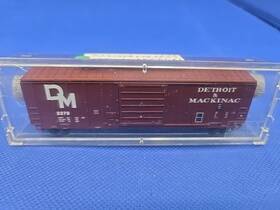
( Brand: Micro-trains Line ), ( Manufacturer Part Number: 25280 ), ( Part Type: Boxcar ), ( Country Of Origin: United States )
Review MICRO TRAINS LINE Mtl Detroit Mackinac Dm 50 Foot Single Door Boxcar
The **Micro-Trains Line 25280 Detroit & Mackinac Railway (DM) Boxcar #2279** is a meticulously crafted, high-detail model that captures the essence of mid-20th-century freight railroading with unparalleled authenticity. Built to exacting standards, this **N-scale (1:160)** single-door boxcar, numbered **N434**, is a stunning representation of the Detroit & Mackinac Railway s robust yet understated fleet, which played a vital role in transporting goods between Detroit, Michigan, and the scenic Mackinac Bridge. The boxcar features a **weathered, aged finish** that mimics decades of exposure to the elements, complete with subtle **rust streaks, faded lettering, and a slightly worn undercarriage**, all achieved through Micro-Trains signature **hand-painted detailing**. The **boxcar s exterior** is adorned with the **DM s classic black-and-white livery**, complete with crisp, slightly worn **white lettering** spelling out *"Detroit & Mackinac Railway"* along the sides, while the **number 2279** is prominently displayed in bold, retro-style numerals. The **single sliding door** on the side is fully articulated, allowing for realistic loading and unloading of freight, while the **roof-mounted grab irons** and **ventilation louvres** add to the car s functional realism.
Underneath, the **chassis is a robust, durable Micro-Trains N-scale design**, featuring **smooth-running, precision-machined axles** with **Kadee knuckle couplers** for seamless hookup with other rolling stock. The **underframe** is intricately detailed with **brake pipes, ladders, and handrails**, all meticulously positioned to reflect the era s engineering standards. For enthusiasts who appreciate operational realism, this boxcar is **equipped with a working brake system**, ensuring smooth and accurate braking performance when paired with compatible locomotives. The **interior** of the car is represented by **subtle panel lines and structural details** visible through the windows, adding depth and authenticity to the model. Whether displayed alone as a centerpiece or integrated into a larger DM or regional freight layout, this boxcar exudes **timeless charm and operational fidelity**, making it a must-have for collectors and modelers seeking to recreate the rich history of the Detroit & Mackinac Railway. Its **durable construction, attention to detail, and historical accuracy** ensure it will be a prized addition to any N-scale freight operation, bridging the gap between nostalgia and modern modeling excellence.
Buying a vintage railroad car like the **Detroit Mackinac Railway (DM) 2279, a 50-foot single-door boxcar (N434)** can be a rewarding but complex endeavor. Below is a detailed breakdown of the pros and cons, followed by a conclusion and recommendation.
---
### **Pros of Purchasing This Boxcar**
1. **Historical Significance and Authenticity**
The DM 2279 is a well-preserved example of a classic **Pullman Standard 50-foot boxcar**, built in the mid-20th century. It carries historical weight, particularly for railfans and collectors who appreciate the era of passenger and freight railroads in the Great Lakes region. The Detroit Mackinac Railway (DM) itself is a heritage line, and owning a car from its fleet adds to its nostalgic appeal.
2. **Potential for Restoration and Display**
If you have mechanical or restoration skills or access to a team with them this boxcar could be a rewarding project. Many boxcars from this era are sought after for static display at museums, railroads, or private collections. The **N434 designation** suggests it may have been part of a numbered series, which can increase its collectibility.
3. **Operational Potential on Heritage Railroads**
Some heritage railroads (like the DM itself) allow private ownership of rolling stock for use on their lines, either for passenger service, freight hauling, or special events. If you re connected to a railroad that permits this, you could potentially use the car in revenue service, adding to its utility beyond just display.
4. **Investment Potential**
Vintage railroad cars, especially well-preserved ones, can appreciate in value over time, particularly if they are rare or associated with a notable railroad. The Detroit Mackinac Railway is a smaller, well-regarded system, which may make this car more desirable to future collectors.
5. **Customization Opportunities**
Boxcars are versatile you could repurpose it for storage, a workshop, a mobile home, or even a unique living space (though this would require significant modifications and permits). Some owners convert them into event spaces, offices, or even small businesses.
6. **Community and Networking Benefits**
Owning a railroad car connects you to a niche community of rail enthusiasts, restorers, and collectors. This can lead to collaborations, shared resources, and access to expertise that might otherwise be difficult to obtain.
7. **Tax and Depreciation Benefits (If Used for Business)**
If you plan to use the car for commercial purposes (e.g., hauling freight on a heritage railroad or renting it out), you may qualify for certain tax deductions related to business use. Consulting an accountant is advisable.
---
### **Cons of Purchasing This Boxcar**
1. **High Initial and Ongoing Costs**
- **Purchase Price:** Vintage boxcars can range from **$20,000 to over $100,000**, depending on condition, rarity, and demand. This one may fall on the higher end due to its DM association and potential restoration value.
- **Restoration Costs:** If the car is not already in pristine condition, restoring it to operational or display-worthy status can cost **$50,000 $200,000 **, depending on the extent of work needed (e.g., underframe repairs, bodywork, paint, interior refinishing).
- **Maintenance:** Even a static display requires upkeep roof leaks, rust prevention, and occasional touch-ups add to long-term expenses.
2. **Storage and Transportation Challenges**
- **Storage:** Railcars require secure, climate-controlled storage (e.g., a rail yard, private lot, or rail museum). If you don t have access to such facilities, storage fees can be **$1,000 $5,000 per year**.
- **Transport:** Moving a 50-foot boxcar is no small feat. You ll need a **flatbed trailer, crane, or railroad switching services**, all of which incur additional costs.
- **Permits and Legal Restrictions:** Some areas have regulations on storing large industrial equipment, and moving it may require special permits.
3. **Lack of Immediate Utility**
Unlike a car or truck, a boxcar isn t practical for everyday use unless you ve repurposed it. If you re buying it purely for investment or display, you ll need to justify the costs with potential future returns.
4. **Time-Consuming Commitment**
Restoring or maintaining a railroad car is a **long-term project** that requires patience, expertise, and possibly a team. If you re not prepared for the time investment, the car could become a burden rather than a passion project.
5. **Market Volatility**
The vintage railroad car market can be unpredictable. While some cars appreciate, others depreciate if they re not in high demand. Economic factors, changes in rail preservation trends, or shifts in collector interests could affect resale value.
6. **Risk of Theft or Vandalism**
Even stored properly, railroad cars can be targets for theft (e.g., copper wiring, metal parts) or vandalism. Security measures (cameras, alarms, gated storage) add to costs.
7. **Limited Resale Market**
Selling a restored or partially restored boxcar isn t always easy. Buyers are often niche (museums, collectors, or heritage railroads), and finding the right match can take time.
8. **Potential for Hidden Issues**
Without a thorough inspection (preferably by a railroad restoration expert), you might uncover **structural weaknesses, rust, asbestos (in older cars), or electrical hazards** that significantly increase repair costs.
---
### **Conclusion**
Buying the **DM 2279 boxcar** is a significant financial and logistical commitment that suits those with a deep passion for railroads, restoration skills, or a long-term investment horizon. It offers **historical value, potential for appreciation, and unique customization opportunities**, but it also demands **substantial upfront and ongoing costs, storage solutions, and a willingness to invest time and effort**.
If you re **connected to a heritage railroad, have restoration experience, or view this as a long-term project**, the purchase could be rewarding. However, if you re looking for a **practical, low-maintenance asset**, this may not be the right fit.
---
### **Recommendation**
1. **If You re Serious About This Purchase:**- **Get a Professional Inspection:** Hire a railroad restoration expert to assess the car s structural integrity, underframe condition, and any hidden damage.
- **Secure Storage First:** Ensure you have a reliable, long-term storage solution before buying.
- **Research the Market:** Talk to other boxcar owners, restoration groups, and heritage railroads to gauge demand and potential resale value.
- **Budget Conservatively:** Factor in **at least 2 3x the purchase price** for restoration and unexpected costs.
- **Join Rail Enthusiast Communities:** Groups like the **National Railway Historical Society (NRHS)** or **Pullman Preservation Society** can offer guidance and networking opportunities.
2. **If You re Unsure:**- Consider **renting or leasing** a boxcar for events or short-term projects before committing to a purchase.
- Explore **smaller or less expensive** railroad cars (e.g., a caboose or gondola) to test the waters before investing in a high-value boxcar.
- If restoration is the goal, start with a **less complex project** (e.g., a car in better condition or a different type of rolling stock).
3. **Alternative Options:**- **Buy a "Project Car" Instead:** If the DM 2279 is out of budget, look for a **cheaper, more damaged boxcar** that could be a more manageable restoration challenge.
- **Invest in a Railroad Stock:** If you love the Detroit Mackinac Railway but can t afford a car, consider purchasing **stock in the railroad** or supporting it through donations.
Ultimately, this purchase is best suited for someone who **treasures railroad history, has the resources to maintain it, and is prepared for a long-term commitment**. If those conditions align, the DM 2279 could be a fantastic addition to your collection. If not, it may be wiser to explore other avenues within the hobby.
Details:
The MTL Micro-Trains Detroit Mackinac DM 2279 is a 50 foot single door boxcar in N gauge. With its brand reputation and precise craftsmanship, this boxcar is sure to enhance the charm authenticity of any N gauge layout. This brand new model, is made in the USA by Micro-Trains Line MTL.
part #: 25280 prices
- $26.00-$58.00
specifications otmodeltrain:
- brand: Micro-trains Line
- mpn: 25280
- part type: Boxcar
- country of origin: United States
shipping ot model train:
- service: USPS Ground Advantage
- class: Standard
- cost: $8.60
- transit: 4-9 Days
- type: Calculated
- carrier: USPS
returns ot model train:
- policy: Returns Accepted
- time: 14 Days
- paid by: Buyer
- method: Money back
payments ot model train:
- wallet: Paypal
- credit card: Diners-club
- other
seller ot model train:
- # reviews: 9752
- rating: 99.4%
- city: Parma, Michigan
general ot model train:
- condition: Used
- model Railroads Trains > Railroads Trains > Other Railroads Trains
offer ot model train:
- best offers: True
- started: May 28, 2026
- availability: In Stock
- sold: 0
- quantity: 1
- options: Ship-to-home
Micro-trains Line 25280 Is Similar To:
- 30 Western 80044010 Micro-trains Denver Grande Rio Nn3 Box Car Weathered (41.2% similar) Crag micro trains Denver Rio grandee western 30' box car w single door weathered...(February 22nd, 2015)
- 90708 Pittsburgh Micro Flush Cutter Hobby Tool Model Trains 792363907088 (20% similar) We proudly proclaim propitious, provident use of prior-deployed pro-Bono provided shipping cartons and packing materials. Avoid this possibility by refraining from emotional, unverifiable and or untruthful statements, name-calling other maliciousness. For small to medium-sized items is added the ...(May 5th, 2018)
- Mt-990-40-901 Micro Trains Z Scale 736902461082 (30.3% similar) ...(November 8th, 2017)
- Mt-990-40-902 Micro Trains Z Scale 736902461211 (30.3% similar) To assemble the track, Line up ends of rail and slide connector joiners together making sure is firmly engaged with joiner on both sides track. Hotlink: micro trains z scale 110MM straight track 1 ea the Micro-trains Line micro-track system features a two part connecting plastic road bed connector ...(August 15th, 2017)
- Mt-990-40-904 Micro Trains Z Scale 736902461204 (30.3% similar) To assemble the track, Line up ends of rail and slide connector joiners together making sure is firmly engaged with joiner on both sides track. Micro trains z scale R195MM x 45D curved track 12 ea the Micro-trains Line micro-track system features a two part connecting plastic road bed connector and ...(October 25th, 2017)
- Mt-990-40-905 Micro Trains Zscale 110mm 736902461037 (30.7% similar) Hotlink: micro trains z scale 110MM straight track w electrical clip and wire 1 ea the Micro-trains Line micro-track system features a two part connecting plastic road bed connector metal rail joiner. To assemble the track, Line up ends of rail and slide connector joiners together making sure is ...(August 15th, 2017)
- Mt-990-40-906 Line Micro Trains Scale Straight Track Ea Mtl 736902461044 (32.9% similar) To assemble the track, Line up ends of rail and slide connector joiners together making sure is firmly engaged with joiner on both sides track. Micro trains z scale 110MM straight track w uncouple 1 ea the Micro-trains Line micro-track system features a two part connecting plastic road bed connector...(January 29th, 2019)
- Mt-990-40-914 Line Micro Trains Scale Degree Left Remote Turnout 736902461051 (33.1% similar) To assemble the track, Line up ends of rail and slide connector joiners together making sure is firmly engaged with joiner on both sides track. Micro trains z scale 13 degree left remote turnout track 1 ea the Micro-trains Line micro-track system features a two part connecting plastic road bed ...(January 29th, 2019)
- Mt-990-40-916 Micro Trains Z Scale 736902461228 (30.3% similar) Hotlink: micro trains z scale remote left and right hand turnout power adapters 4 each the Micro-trains Line micro-track system features a two part connecting plastic road bed connector metal rail joiner. To assemble the track, Line up ends of rail and slide connector joiners together making sure is...(August 15th, 2017)
- Micro-trains Line 695140034321 Popsicle Special Edition N Scale Set Brand New Factory Sealed (31.6% similar) Only available to buyers in the 48 continental USA...(October 4th, 2023)
- Micro-trains Line Mtl 09954330 99330 Micro-trains Adm Uelx 60220 Covered Hopper Fw Weathered With Jc (51.5% similar) This is a factory weathered car. The car is painted gray with blue, white, yellow and multi color printing. 09954330 99330 ADM 3 bay covered hopper car. The car and box are in perfect condition. The ADM car has end printing. The car is from a 4 set and there no price tag on the paper insert. This is...(October 9th, 2023)