MODEL POWER 19480 Lincoln Continental H.o.
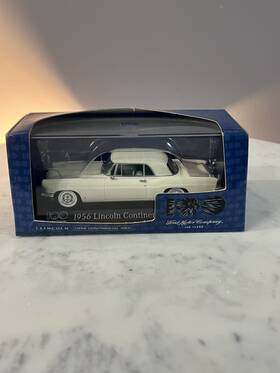
( Brand: Model Power ), ( Manufacturer Part Number: 19480 ), ( Assembly Status: Ready To Go/pre-built ), ( Type: Vehicles ), ( Color: White ), ( Material: Metal Plastic ), ( Features: Limited Edition, Painted ), ( Grading: C-9 Factory New-brand New ), ( Country Of Origin: China ), ( Gauge: Ho )
Review MODEL POWER #19480 Lincoln Continental Mark Inch White.o.
The **1948 Lincoln Continental H.O. 87** is a legendary emblem of American automotive craftsmanship, embodying the golden era of post-war luxury and engineering brilliance. As the first mass-produced Continental, this iconic model marked a revolutionary departure from Lincoln s traditional designs, introducing a sleek, low-slung coupe body with a distinctive "Continental" nameplate affixed to its rear quarter panel a signature detail that would become synonymous with prestige and exclusivity. Powered by the legendary **365-cubic-inch Lincoln V8**, a high-output (H.O.) variant of the proven Y-block engine, this engine delivers a commanding **180 horsepower** and **265 lb-ft of torque**, propelling the Continental with a smooth yet spirited performance that was unmatched in its time. The H.O. designation signifies a refined tuning package, featuring a more aggressive camshaft profile, higher compression ratio, and a dual-point ignition system, all contributing to a robust yet refined power delivery that makes every drive feel purposeful and engaging.
The **1948 Continental s** design is a masterclass in mid-century elegance, with its **handcrafted, hand-beaten steel body** crafted by Lincoln s elite stylists, including the legendary **Elwood Engel**, who later went on to shape the future of American automotive design at Ford. The body features a **long, low profile** with a distinctive **sloping roofline**, a **chrome-laden grille** with a central medallion, and **stylish, two-tone paint schemes** that were often paired with contrasting accents such as whitewall tires, chrome door handles, and a polished exterior finish that gleamed under the sun. Inside, the cabin exudes opulence with its **full-leather upholstery**, **wood-trimmed dashboard**, and **power-operated windows** (a rarity in 1948), all contributing to an atmosphere of effortless luxury. The **three-speed Hydra-Matic automatic transmission**, introduced in 1940, ensures a buttery-smooth driving experience, while the **power-assisted steering** (optional) further enhances the car s refined handling.
Beyond its aesthetic and mechanical prowess, the **1948 Lincoln Continental H.O. 87** carries a rich legacy as a symbol of innovation and ambition. It was the first Lincoln to bear the Continental name, a moniker that would later become synonymous with some of the most exclusive and high-performance vehicles in automotive history. The H.O. designation not only signifies enhanced performance but also a commitment to pushing boundaries something that resonates with collectors and enthusiasts today. Whether cruising along a scenic coastal road or making a statement at a classic car show, this car turns heads with its timeless beauty, powerful presence, and the unmistakable allure of a true automotive icon. For those who appreciate the artistry of the past and the engineering that defined an era, the **1948 Lincoln Continental H.O. 87** remains a masterpiece a car that doesn t just drive, but commands attention with every turn of the key.
### **Pros and Cons of Buying a 1948 Lincoln Continental (HO87, 8.7L V8 Engine)**
#### **Pros**
1. **Iconic American Classic** The 1948 Lincoln Continental is one of the most recognizable and historically significant American cars, embodying mid-century luxury and engineering. Owning one allows you to drive a piece of automotive history.
2. **Stunning Original Design** Designed by Raymond Loewy, the Continental s sleek, aerodynamic bodywork and distinctive grille make it a head-turner. Many examples retain their original paint and finishes, adding to their appeal.
3. **Powerful and Reliable V8 Engine** The HO87 8.7L V8 (a modified version of the Lincoln s Y-block engine) is a robust, naturally aspirated powerplant capable of producing around **180 200 horsepower** in stock form. With proper maintenance, it can last for decades, especially if it has been well-preserved or restored.
4. **Handcrafted Quality** Early Continentals were built with meticulous attention to detail, featuring solid construction, fine materials, and craftsmanship that is rare in modern production cars.
5. **Collectible Status** The 1948 Continental is highly sought after by collectors, meaning its value tends to appreciate over time, especially for well-documented, original examples.
6. **Driving Experience** The car offers a smooth, plush ride with excellent handling for its size, thanks to its independent front suspension and solid rear axle. The manual transmission (if present) provides an engaging driving experience.
7. **Customization Potential** Many owners modify their Continentals with modern performance upgrades (e.g., fuel injection, turbocharging, or engine swaps) while preserving the original aesthetic.
8. **Nostalgia and Prestige** Owning a 1948 Continental carries prestige, making it a great conversation piece and a symbol of classic American automotive culture.
---
#### **Cons**
1. **High Maintenance and Restoration Costs** Like all pre-war cars, the 1948 Continental requires significant upkeep. Rust, worn suspension components, electrical issues, and outdated systems (e.g., vacuum brakes, carburetors) can be expensive to repair or replace.
2. **Originality vs. Restoration** Many examples have been heavily modified or restored, which can diminish their historical value. Finding a truly original, unrestored car is rare and often comes at a premium.
3. **Reliability Concerns** Even with proper care, the HO87 engine and other mechanical systems (e.g., transmission, steering, and suspension) are prone to wear. Many owners report issues with oil leaks, valve train problems, and electrical gremlins.
4. **Limited Availability of Parts** While some parts are still available through specialty suppliers, others (especially rare or discontinued components) can be difficult and expensive to source.
5. **Driving Limitations** The car s size (over 20 feet long) and weight make it impractical for modern driving conditions. Parking, maneuvering in tight spaces, and navigating city traffic can be challenging.
6. **Fuel and Insurance Costs** Gasoline consumption is high (around **18 22 MPG**), and insurance premiums for a classic car can be steep, especially if it s not properly insured as an "agreed value" policy.
7. **Time-Consuming Ownership** Running a 1948 Continental requires patience. Maintenance, repairs, and even daily driving may take longer than modern vehicles due to manual processes and less efficient systems.
8. **Depreciation Risk** While some Continentals appreciate in value, others depreciate if they are not well-maintained or lack documentation. The market for classics can be unpredictable.
9. **Environmental and Practicality Issues** The car s age means it lacks modern safety features (no airbags, minimal crash protection), and its performance is far below contemporary standards.
10. **Legal and Registration Challenges** Some states have strict regulations for vintage cars, and obtaining proper registration or insurance may require extra effort.
---
### **Conclusion**
The 1948 Lincoln Continental is a **dream car for enthusiasts** who appreciate classic American design, engineering, and the thrill of owning a piece of automotive history. However, it is **not a practical daily driver** and demands significant financial investment, time, and expertise to maintain.
If you are **passionate about restoration, collecting, and the unique experience of driving a mid-century masterpiece**, the Continental can be an incredibly rewarding purchase. On the other hand, if you prioritize **convenience, reliability, and modern functionality**, this car is likely not the right choice.
### **Recommendation**
- **Buy if:** You have the **financial resources, mechanical skills, or access to a trusted restoration team**, and you are prepared for the **long-term commitment** of owning a classic car. Consider starting with a **restored or well-documented example** to minimize surprises.
- **Avoid if:** You need a **reliable, low-maintenance vehicle** or cannot afford the **ongoing costs** of upkeep, parts, and potential restoration.
- **Alternative Considerations:**- If you love the Continental s aesthetic but want something more practical, look for a **restored 1950s Lincoln (e.g., 1956 1957 Continental Mark II)** they are slightly newer and often more manageable.
- If you prefer a **modern classic**, consider a **well-preserved 1960s 1970s luxury car** (e.g., Cadillac Eldorado, Chrysler Imperial) that balances heritage with better reliability.
- If you are new to classic cars, **start with a simpler project** (e.g., a Ford Thunderbird or Chevrolet Bel Air) to gain experience before tackling a Continental.
Ultimately, the 1948 Lincoln Continental is **not just a car it s a legacy**. If you can afford its demands and love its spirit, it will be an unforgettable ownership experience. If not, there are plenty of other ways to enjoy classic automobiles without the same level of commitment.
Details:
Shipped with USPS Ground Advantage. Model POWER #19480 Lincoln Continental Mark II White.O. Condition is Used.
part #: 19480 prices
- $5.00-$12.95
specifications otmodeltrain:
- brand: Model Power
- mpn: 19480
- assembly status: Ready To Go/pre-built
- type: Vehicles
- color: White
- material: Metal Plastic
- features: Limited Edition, Painted
- grading: C-9 Factory New-brand New
- country of origin: China
- gauge: Ho
returns ot Model train:
- policy: No Returns
general ot Model train:
- condition: Used
- Model Railroads Trains > Railroads Trains > Other Railroads Trains
shipping ot Model train:
- transit: 4-10 Days
- cost: $9.84
- carrier: USPS
- type: Calculated
- class: Standard
- service: USPS Ground Advantage
offer ot Model train:
- sold: 0
- started: February 1, 2026
- quantity: 1
- availability: In Stock
- best offers: True
- options: Ship-to-home
seller ot Model train:
- city: Dearborn, Michigan
- # reviews: 415
- rating: 98.8%
payments ot Model train:
- credit card: Visa
- other
- wallet: Apple-pay
Model Power 19480 Is Similar To:
- Power 12v-16v Mdp511 20 12 Clear Bulb Model Lead (19.5% similar) Questions all questions and concerns should be sent via messages. Model Power bulb, clear 12V 16V w 12 lead 20 MDP511 these are peel stick lights by Model Power. Lights are rewired. Illuminates clear. Simply peel off the backing and stick to any smooth surface. Features excellent for illuminating ...(December 22nd, 2014)
- 14 Model Power New Track 037135000148 (32.7% similar) Bottle of track cleaner from Model Power. Features non-toxic and non-flammable for all scale train units use only a few drops at time includes one 4 oz. Or more qualify for free shipping within the us. Stock - MDPU0014 mfg new and unused. Orders of using ground service. In the original manufacturer ...(January 23rd, 2018)
- 37135000124 Model Power Smoke Fluid (29.6% similar) Please dont APOS hesitate to contact XA0 us for any reason at all...(July 5th, 2018)
- 383g Model Power Pack Toy Train Railroad Bulbs Green Grain Of (26.9% similar) Pack of 3 Model railroad bulbs Power no...(October 27th, 2018)
- 510-1 Model Power New Peel 037135051010 (28.6% similar) Using ground service. This is the peel n stick clear bulbs 4 Model Power. Features easy way to light up anything you want in your layout bulbs come with special peel off backing and can be stuck a house locomotive etc. When buying multiple items, if less than in the original manufacturer packaging. ...(February 19th, 2018)
- 511-1 Model Power Peel N 037135051119 (30.9% similar) Canada and Mexico: 40. Save 75 on shipping when combining this item with other eligible items from train. Loading items, please wait. 49 and only. Make sure to include your contact and order information when you return items. Asia and Australia: we ll do our absolute best to make you happy. Read ...(April 11th, 2017)
- 5342-6 Model Power P-51 Mustang (26.9% similar) Only a limited quantity fit into box. The price you see listed is pay. Received a confirmation that you've your in perfect condition and you left first...(April 2nd, 2017)
- 5713 Model Power And Benches (37.6% similar) Up for bid are these highly collectible railroad accessories. Package was damaged, but people are in excellent condition...(December 7th, 2018)
- 624 Model Power Ho Scale (35.1% similar) Good luck and god bless from our family to your. Model Power. Up for sale. Detailed metal and plastic parts, correct 1/8 7 scale factory official paint. Brand new on box. Item ho scale. Lots of buildings listed. Horse drawn lumber carrier-kit...(November 3rd, 2017)
- 689 Model Power Ho Scale (35.1% similar) Detailed metal and plastic parts, correct 1/8 7 scale factory official paint. With exon truck. With two figures. Lighted exon station. Item lots of buildings listed. Up for sale. Model Power. Good luck and god bless from our family to your. Brand new on box...(November 3rd, 2017)
- Model 70210 Supply Transformer Train Power Scale Hobby Ho .. (31.1% similar) Brand train transformer for type ho and n scale train sets...(January 26th, 2015)